
smarathe

Tax insurance has become an increasingly common part of how clean energy tax credit deals get structured. The One Big Beautiful Bill (OBBB) narrowed and restructured several credit programs, and the deals still moving through the market now carry a different risk profile than they did a year ago. This shift has made tax insurance a more routine part of deal economics, rather than an occasional add-on. What tax insurance covers Tax insurance shifts specific tax risks in a transaction from the taxpayer to an insurer. In the tax credit market, that typically includes coverage for: Qualification risk: Whether a project meets the technical requirements to claim a credit in the first place. Recapture risk: Whether a credit already claimed could be clawed back if the underlying project later fails to meet its requirements. Timing risk: Whether a project meets beginning of construction (BOC) or placed-in-service deadlines. If the Internal Revenue Service (IRS) later challenges the position, the policy responds instead of a buyer or investor absorbing the loss directly. Coverage typically includes the credit amount, interest, penalties and defense costs. How the post-OBBB risk looks different OBBB introduced an accelerated termination for the Section 45Y Production Tax Credit (PTC) and Section 48E Investment Tax Credit (ITC) for solar and wind projects, along with the Foreign Entity of Concern (FEOC) restrictions on the projects and buyers with ties to certain foreign entities. Both changes created new categories of risk that weren’t a part of underwriting diligence prior to the new framework. For deals racing to meet the BOC deadline, documentation quality can now matter more directly to a project’s insurability. For FEOC, buyers of transferred credits need to confirm their own status as well as the project’s. This required confirmation has in many cases, made supply chain documentation,…

Missouri’s Historic Preservation Tax Credit (HTC) program is getting a significant expansion under HB 3080, signed into law this year. HB 3080, or the Missouri Historic, Rural Revitalization, and Development Act, increases the credit rate from 25% to 35% for qualifying projects, will make more than $60 million in tax credits available for qualifying large historic properties. The legislation creates new categories within the existing program, broadening the range of projects that qualify for state HTCs. The streamlining provisions are already drawing attention from developers and investors, with projects reported across St. Louis, Kansas City, Joplin and St. Joseph. “Historic Revitalization for Missouri fought to the final hour on passage of HB 3080 in this year’s legislative session,” said Jim Farrell, president of Historic Revitalization for Missouri (HRM), the statewide association for the historic redevelopment industry in an email to Foss & Company in June 2026. “This bill once again positions Missouri as a leader in the country in historic redevelopment projects. The bill’s effective streamlining language is attracting national developers and investors into communities from St. Louis to Joplin and Kansas City to St. Joseph.” What the credit expansion means for developers and investors The rate increase from 25% to 35% meaningfully changes the economics for historic rehabilitation projects in Missouri. Combined with the federal HTC, which provides a 20% credit on qualified rehabilitation expenditures, Missouri projects can now access a combined state and federal credit rate can now access a combined state and federal credit rate up to 55% of qualified rehabilitation expenditures. The annual cap of more than $60 million in state credits, also reduces the uncertainty that has historically constrained deal volume under the program. When credit availability is limited, projects compete for allocations and timelines become unpredictable. A larger cap creates more room for…

Q2 2026 was a busy one for Foss & Company and for the tax credit market as a whole. We kicked things off in April by convening an investor roundtable in Atlanta, where we dug into market dynamics, regulatory developments and capital deployment strategies across energy, infrastructure and historic tax credit investments. From there, the quarter kept moving: our team crisscrossed the country for conferences, met with current and prospective investors, and hosted social events to keep those relationships warm. Meanwhile, our Investments, Historic Tax Credit and Energy & Infrastructure teams stayed close to every piece of new industry guidance, sharing their perspective through blog posts, Insights papers, panel discussions and media commentary. A year out from the One Big Beautiful Bill (OB3), we’re still finding value-added investment solutions for our clients across markets that continue to adapt to evolving guidance. As we move into Q3, our focus stays where it’s always been: underwriting, due diligence and compliance. Market guidance and thought leadership We published two white papers this quarter. Practical Application Guide: Transferable Tax Credit Carrybacks walks through the mechanics of carrying back transferred clean energy tax credits under Section 6418, covering filing procedures, NOL interaction and Section 38(c) limitations. Partner and Managing Director Eric Brubaker also authored Historic Tax Credits in 2026: Durable Incentives, Institutional Discipline and a Market That Scales, an in-depth look at the federal and state HTC landscape. Kevin Haley added two blog posts to the mix this quarter, tackling six big questions facing energy and infrastructure investors and breaking down what corporate directors need to know about carrybacks on transferred tax credits. We also published a piece on how tax equity is helping fund the rehabilitation of historic landmarks in Cleveland, Ohio. Capital deployment across clean fuel, distributed generation and historic tax credits It…

America turns 250 on July 4, 2026. Much of what makes this country worth celebrating, from its historic buildings and communities to its clean energy future, has been shaped by the federal tax credit. For most of the country’s first two centuries, the federal government influenced private investment through spending, tariffs and regulation. The Tax Reform Act of 1976 changed that for historic preservation, introducing the first federal tax incentives for rehabilitating historic buildings. The Tax Reform Act of 1986 set the Historic Tax Credit (HTC) at 20% for certified historic structures. Since 1976, the HTC has supported rehabilitation of more than 49,000 buildings, generated over $199 billion in private investment and created nearly 3 million jobs in downtowns, main streets and neighborhoods across all 50 states. Congress applied the same structure to other priorities. The Low-Income Housing Tax Credit, New Markets Tax Credit and the renewable energy credits that now finance solar, wind and battery storage across the country all work the same way: private capital directed toward public goals, with a federal credit making the economics work. Foss & Company has been part of this history since Joe Foss founded the firm in 1983, just seven years after the first historic tax incentives became law. Over four decades and more than $11 billion in tax equity deployed, Foss has helped preserve historic buildings and finance clean energy infrastructure from coast to coast. As America marks 250 years, that work continues. To learn more or explore a partnership, contact Foss & Company.

By Kevin Haley, SVP Investments If your company has purchased transferable clean energy tax credits via Section 6418, you already understand the core value proposition: convert someone else’s tax credit into a dollar-for-dollar reduction of your own federal income tax. But a question we encounter regularly, even among experienced tax leaders, is what happens when the purchased credit exceeds your current-year tax capacity? The short answer is simple: you can carry it back. And for most credits generated after December 31, 2022, the carryback window is three years, not one. That represents a real cash recovery opportunity on prior year tax payments. It also introduces some process complexity that warrants careful analysis before you agree to a transfer price. We’ll show you the basics of a carryback and how to apply it to your tax situation. The basics: you own the credit Section 6418(a) is clear on this point. Once the transfer election is made, the transferee (i.e. your company) is treated as the taxpayer with respect to the credit. It enters your Form 3800, flows through the general business credit computation under Sections 38 and 39, and behaves exactly as if you owned the project had generated it. There is no hybrid treatment, no pass-through mechanic, and no continuing dependency on the seller’s return. The credit appears in your first taxable year ending with or after the transferor’s credit-determination year. For calendar-year buyers purchasing calendar-year credits, the mapping is intuitive. For fiscal-year buyers, less so… For example, a company with a June 30 fiscal year-end purchasing a credit from a seller’s calendar year 2025 would take the credit into account on the fiscal year ending June 30, 2026. That one-period shift changes which three prior years are available for carryback and it should be modeled before you set a…

In 2026, the conversation around energy and infrastructure is not centered on whether the market still exists. It is centered on how the market is evolving. The One Big Beautiful Bill (OB3) changed the landscape, but it did not eliminate demand for renewable energy, tax equity or tax credit investing. Kevin Haley, SVP of Investments at Foss & Company, answers six of the biggest questions shaping energy and infrastructure in 2026. His perspective highlights how the market is adjusting to new rules, new timelines and new sources of opportunity across energy, infrastructure and historic preservation in 2026. 1. Does America still need renewable energy? Yes. America still needs renewable energy. Data centers and AI growth continue to increase demand. Cost curves are still coming down. There is also a bottleneck in traditional energy infrastructure, including delays in gas turbine delivery. Federal policy is still largely supportive of clean energy infrastructure growth. 2. Did the One Big Beautiful Bill (OB3) kill the clean energy industry? No, OB3 introduced a managed ramp down to certain clean energy incentives, especially wind and solar. OB3 sought to provide stability by creating rules for tax credit financing that the market can predict and adapt to. OB3 enhanced certain credits, such as the 45Z credit, which has proven to be very popular with corporate taxpayers who are buyers of these transferable tax credits. The market is working through the new complexities of OB3. That includes updating commercial terms, adding a premium to legacy credits that are not exposed to foreign entity of concern (FEOC) provisions, adding a premium to larger, creditworthy and investment-grade sellers who can fully backstop the credits they are selling and creating new insurance products to cover new risks. 3. Are other tax equity programs still viable? Yes. The Section…
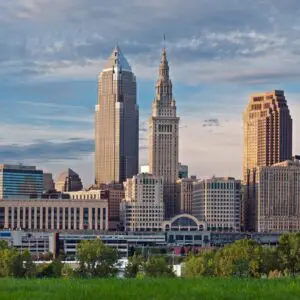
A recent Wall Street Journal article spotlighted Cleveland’s continued momentum in historic rehabilitation and highlighted how landmark buildings are being reimagined as apartments, hotels, retail and community-focused spaces across downtown. The piece points to a market shaped by adaptive reuse, historic character and sustained demand for urban living. Foss & Company is proud to have supported that momentum by providing capital through federal and state historic tax equity and bridge loans for projects that have helped reshape the city. As the article puts it, downtown Cleveland renters are “moving back to the future” as historic buildings are reborn for modern use. To date, Foss & Company has been involved in 17 projects in Cleveland, OH, representing more than $762 million in total construction costs and more than 3.4 million square feet redeveloped. Across those projects, our teams have financed the creation of 1,566 apartment units, 337 hotel units and more than 1 million square feet of commercial space. These numbers reflect not only the scale of redevelopment in Cleveland but also our continued commitment to the market. Several of the properties referenced in the Journal article are part of that broader Cleveland story. Foss & Company worked with K&D Group on Terminal Tower Residences, Heinen’s Grocery Store at The 9 and Residences at Halle. Each of these projects reflects the power of historic rehabilitation to preserve iconic buildings while repositioning them for modern use. The article notes Terminal Tower’s significance as a 1920s landmark, highlights Residences at Halle as part of the downtown adaptive reuse movement and features Heinen’s Grocery Store at The 9 as a notable retail use within a historic former bank building. Beyond the projects named in the article, Foss & Company also worked with K&D on 55 Public Square, another important Cleveland redevelopment. Taken together, these…

Q1 2026 was an active quarter for Foss & Company and the broader tax credit market. The Internal Revenue Service (IRS) released new guidance related to Foreign Entity of Concern (FEOC) restrictions and the Section 45Z Clean Fuel Production Tax Credit, creating important considerations across renewable energy, carbon and advanced manufacturing transactions. In response, Foss & Company published a Section 45Z guidance white paper and a Clean Fuel Tax Credit Primer to help investors and developers interpret the evolving rules. Our team has also been closely analyzing the practical implications of the FEOC guidance, advising clients on compliance, structuring and market impact. We contributed to the broader industry discussion through two Bloomberg Intelligence webinars following Notice 2026-15 and the One Big Beautiful Bill, examining how policy developments are reshaping capital structures, investor behavior and project execution strategies across solar, wind and carbon credits. As regulatory guidance continues to evolve, clarity and disciplined execution remain essential. Executing Across Energy & Infrastructure and Historic Tax Credit Markets Despite regulatory movement, the market continued to demonstrate resilience and opportunity. During Q1, Foss & Company closed transactions across transferable credits, traditional tax equity structures via energy and infrastructure projects as well as historic preservation projects. Clean Fuel & Transferable Tax Credit Transactions Project Kipling: Approximately $210 million of Section 45Z Clean Fuel Production Tax Credits across Michigan, Iowa, South Dakota, and Indiana. Project Surrey: Approximately $59.7 million of Section 48 Investment Tax Credits for a landfill gas-to-renewable natural gas facility in Ohio. Project Bowstring: Approximately $45 million of Section 48E Investment Tax Credits supporting a 2,800-system residential solar and battery portfolio in Puerto Rico. These transactions reflect the continued maturation of the transferable credit market and the increasing sophistication of clean fuel and distributed generation investments. Distributed Generation & Microgrid Investments Foss & Company executed multiple Section 48 tax equity investments across diversified portfolios: Project London II: $32.2 million Section 48 tax equity investment across CA, MD, and NY. Project London: $16.2 million Section 48 tax equity investment across ME, MD, and NY. …

In a recent Bloomberg webinar, Bryen Alperin, Managing Director & Partner at Foss & Company, joined Derrick Flakoll of BloombergNEF and Bloomberg Intelligence’s Andrew Silverman to discuss one of the most important recent developments in the clean energy tax credit market under One Big Beautiful Bill (OB3): IRS Notice 2026-15. The discussion focused on how the notice begins to operationalize the foreign entity of concern (FEOC) framework, with particular emphasis on the material assistance rules. While OB3 established the statutory framework, Notice 2026-15 gives investors and market participants more practical direction on how those rules may apply in real transactions. Why this matters now Before the notice, FEOC and material assistance rules were widely recognized as important, but difficult to implement. Investors were left asking practical questions about diligence, documentation and how to evaluate exposure before closing. As the market works through FEOC and material assistance requirements, participants are focused on how these rules may shape diligence, documentation and transaction execution. Notice 2026-15 does not answer every open question, but it marks an important step toward a more workable framework. This discussion is especially relevant for investors, developers and manufacturers to better understand where the market is headed. Why material assistance matters to investors One of the central themes of the webinar was the growing importance of material assistance in the clean energy market. As these rules begin to take shape, they are becoming more relevant to how investors think of eligibility, risk allocation and overall transaction structure. The conversation also underscored the various ways in which these issues are not confined to policy alone. They discuss the factors and practical questions related to supply chains and discuss how market participants prepare for evolving compliance expectations. Where the notice provides meaningful clarity The webinar highlighted several ways in which Notice 2026-15 begins to give the market a more usable framework. For investors, that added clarity may help support more informed diligence and a more structured approach to evaluating opportunities. At the same time, the discussion made it clear that the notice is a part of the broader process. The guidance moves the market forward, but it…

Foss & Company recently hosted a webinar with Bloomberg Intelligence to discuss clean energy tax credits in the post–One Big Beautiful Bill (OB3) environment and what market participants should prioritize in 2026. The panel featured Bryen Alperin, Foss & Company Managing Director & Partner, and Kevin Haley, Foss & Company Senior Vice President of Investments, alongside Bloomberg Intelligence Senior Analysts Rob Barnett, who covers global solar, wind, and carbon, and Andrew Silverman, who covers U.S. tax policy. Market Backdrop: Data Center Power Demand & Post-OB3 Clean Energy Credits Bloomberg Intelligence provided market context on power demand and the pace of development. Data center growth and domestic manufacturing continue to add to U.S. electricity demand, with constraints on new conventional generation capacity reinforcing the role of renewables and storage in meeting near-term needs. What OB3 Changes: Timing, Planning & Strategy The discussion then focused on what OB3 changes for transactions and project planning. Many clean energy credits remain in place, and transferability and direct pay continue to be available tools. The most immediate pressure point is timing for wind and solar. The panel reviewed accelerated timelines that increase the importance of “begin construction” strategies and placing-in-service planning, supported by documentation that can withstand buyer and investor diligence. “Begin Construction” In Practice The panel also addressed how “begin construction” is evaluated in practice. While the market is familiar with “begin construction” frameworks, wind and solar now face more specific rules that put greater weight on physical work and continuity. Developers are applying established approaches to support eligibility, and buyers are underwriting construction methodology and recordkeeping with greater scrutiny. Diligence Focus: FEOC & Supply Chains Diligence priorities are also shifting. Foreign-entity related restrictions, also known as Foreign Entity of Concern (FEOC) restrictions and supply chain exposures, are now central workstreams for many transactions. The panel discussed how these requirements can affect contracting and procurement decisions, as well as representations, covenants, and risk allocation between parties. Related considerations, including material assistance analysis and questions around control, are increasingly shaping how investors and buyers’ structure deal. Bryen and…

As we move further into 2026, Foss & Company reflects on a year defined by execution across the tax equity and transferable credit markets. In the fourth quarter (Q4) of 2025, our teams worked closely together to support more than two dozen closings before year-end across our investments, legal, marketing, real estate, and renewable energy and sustainable technologies teams. Foss & Company understands this moment. We have navigated periods of transition before, and we remained focused on what matters most: creating long-term value, strengthening partnerships and executing with clarity. Over the past year, Foss & Company continued to expand our team and deepen relationships across the market, reinforcing our role as a stable and trusted partner amid complexity. To learn more about market developments following One Big Beautiful Bill (OB3), register for Foss & Company’s upcoming webinar with Bloomberg. A snapshot of Q4 closings During Q4, Foss & Company supported a diverse set of transactions across renewable energy, adaptive reuse and community-focused development. Highlights include: Project Alamo Sun (Jones County, TX): Transferable transaction of approximately $331 million in Production Tax Credits (PTCs) generated over a 10-year period (2026-2036) from two solar facilities totaling 400 MWac. 22 Fulton Street (Newark, NJ): Tax credit purchase of $90 million in NJ Aspire Tax Credits supporting a downtown residential development. 707 E. Main (Richmond, VA): Historic tax credit investment of $21.9 million in federal historic tax credits and $27.6 million in VA State Historic Tax Credits, plus $33.4 million in historic tax credit bridge loan financing. Shinola Hotel (Indianapolis, IN): Investment of $33 million in IN Redevelopment Tax Credits supporting an adaptive reuse project. Antique Apartments (Columbia, SC): Investment of $12.8 million in SC Textile Tax Credits supporting new student housing. Upper Spotsy 2 (Fredericksburg, VA): Investment of $7.6 million in VA State Historic Tax Credits supporting redevelopment within a mixed-use district. Additional projects this quarter included Jagger Mill (Sanford, ME), Heller Keller-Kohn (Cleveland, OH), Stacks at Easley (Rock Hill, SC), Miller Corset Factory (Canandaigua, NY), Peanut Crossing 2 (Suffolk, VA), Ten20 (Columbus, IN), Salem Bottleworks (Winston-Salem, NC), and more. For more Foss & Company projects, visit the Projects page on our website. Recent News and Coverage Foss & Company was featured in several recent announcements and industry stories, including: …

Tax credits can unlock significant project value, but if compliance slips, that value can disappear. Within the tax credit market, there are three programs that move capital into projects that shape communities and the clean energy transition – the Investment Tax Credit (ITC), Federal Historic Tax Credit (HTC) and the Production Tax Credit (PTC). The ITC and PTC fuel renewable energy generation and storage (including Battery Energy Storage Systems), while the HTC revitalizes historic properties and local economies. While these programs open the door to meaningful investment and impact, they also come with strict compliance obligations. When the IRS reclaims previously earned credits because a project falls out of compliance, this is officially known as recapture. Understanding recapture risk is essential to protecting returns, maintaining investor confidence and supporting the long-term success of clean energy and historic rehabilitation investments. THE RISE OF RECAPTURE RISK UNDER THE INFLATION REDUCTION ACT Since the Inflation Reduction Act (IRA) passed in 2022, sponsors and investors have increasingly used tax credits to finance clean energy and historic rehabilitation projects. With that growth comes heightened focus on compliance — and a greater need for disciplined oversight once projects are operational. If a project falls out of compliance during its applicable compliance period, the IRS may reclaim part, or all, of the tax credits claimed. ITC and HTC Recapture Periods For the ITC and HTC, the compliance period is five years. Credits “vest” 20% each year over five years: Year 1: Up to 100% recapture Year 2: Up to 80% Year 3: Up to 60% Year 4: Up to 40% Year 5: Up to 20% After Year 5: No recapture risk PTC Recapture Period For the PTC, compliance runs for ten years and depends on maintaining qualified production. Losing eligibility can disallow current or…

As we closed the third quarter of 2025, Foss & Company continued to provide clarity in a market still settling after OB3. Q3 was about certainty from translating evolving guidance, addressing questions around FEOC rules, to helping partners move forward with confidence. At the end of the quarter, we introduced a refreshed brand identity featuring an updated logo and modernized visual system. The evolution reflects our continued growth and maturity while reaffirming the values that define our approach to institutional partnership and disciplined execution. Driving Value Across Clean Energy & Historic Preservation Foss & Company advanced several projects this quarter, reinforcing our commitment to both sustainability and historic preservation: Hale Kuawehi, Island of Hawai‘i, HI – A 30 MW solar array with co-located 122.8 MWh battery storage, marking our third successful transaction in Hawai‘i. Overton Lofts, Elizabeth City, NC – Our first transaction with Miller & Associates, transforming the historic 1908 Elizabeth City Cotton Mills through Federal Historic Tax Credits and NC State Mill Rehabilitation Credits. Johnson City, San Antonio, TX – Redevelopment of the Johnson City High School into apartments, office space, and a pre-leased nursing school, supported by federal and state historic tax credits. Tower of Maumee, Toledo, OH – Phase two of a historic reuse project delivering 91 market-rate apartments and office space, supported by Federal HTC and Ohio Historic Preservation Tax Credits. Additional projects this quarter included Okun Produce Building (OH), 334–346 Bryant St (NY), Fayette Park (ST), Dunbar School (NC), Forge 417 (OH), 210–216 Fayetteville (NC), Project Wisteria (ST), and the Shinola Hotel (IN). Engaging the Industry Our team remained highly active in the field, speaking and sponsoring across the country: Infocast Texas Clean Energy – Austin, TX – VP Dawn Lima joined industry leaders to discuss the clean energy landscape. RE+ National Conference –…

For more than four decades, Foss & Company has served as a trusted partner in the tax equity marketplace, helping institutions, corporations, and investors unlock opportunities that deliver both strong returns and meaningful community impact. Our reputation has been built on consistency, expertise and integrity—and those values remain at the heart of everything we do. Today, we are proud to share a new chapter in our journey: the unveiling of a refreshed Foss & Company brand identity. Why the Update? Our business, and the world around us, has evolved significantly since our founding. As we continue to grow and expand our reach, we recognized the need for a brand that better reflects both who we are today and where we are headed. The refreshed Foss & Company brand identity, including our updated logo and new visual language, is designed to capture the balance we strive for: honoring our legacy while embracing innovation. It conveys modernity, professionalism and strength, while staying true to the trust and reliability that clients, partners and communities have come to expect from us. What This Means for Our Partners While the look of Foss & Company has evolved, our mission remains unchanged: to provide exceptional tax equity investment solutions that generate financial returns and positive social impact. You’ll see the new brand reflected across our website, presentations and communications in the months ahead. More importantly, you’ll continue to experience the same client-focused approach and deep expertise that have always defined our firm. Looking Ahead This refreshed identity is more than just a new logo – it’s a symbol of our ongoing commitment to progress, partnership and impact. We’re excited to continue building on our legacy with a modern brand that supports the next chapter of growth for Foss & Company, our investor and developer partners, and…